Sleep & Breathwork
The Missing Link to Deep Rest
Most people think they have a sleep problem.
But what they actually have is a nervous system problem.
The modern world has conditioned people to live in a constant low-grade stress response. Racing thoughts. Tight chest. Shallow breathing. Overstimulation. Cortisol spikes. Scrolling at midnight while the nervous system is screaming for rest.
Then people wonder why they can’t sleep.
Sleep is not something you force. Sleep is something you allow.
And one of the fastest ways to allow the body to enter deep rest is through the breath.
Your breath is the remote control to your nervous system.
When you change the rhythm of your breathing, you change your physiology. Heart rate slows. Muscles soften. Blood pressure drops. The mind becomes quieter. The body shifts from survival mode into recovery mode.
This is why breathwork has become one of the most powerful tools for improving sleep quality naturally.
Why Breathing Matters for Sleep
Most people breathe too fast, too shallow, and through the mouth without even realizing it.
This keeps the nervous system stimulated.
Poor breathing patterns can:
- Increase anxiety and racing thoughts
- Elevate heart rate
- Increase stress hormones
- Create tension in the body
- Disrupt oxygen and carbon dioxide balance
- Make it harder to fall asleep and stay asleep
Slow, controlled breathing does the exact opposite.
It stimulates the vagus nerve, activates the parasympathetic nervous system, and signals safety to the brain and body.
In simple terms, your body cannot deeply relax while breathing like it’s being chased.
Coherence Breathing: Synchronizing the Body and Mind
One of the most effective breathing methods for sleep is called coherence breathing.
This technique helps synchronize the breath, heart, and nervous system into a more balanced rhythm.
The goal is simple: breathe slowly and evenly.
A common rhythm is:
- Inhale for 5 seconds
- Exhale for 5 seconds
This creates approximately 5 to 6 breaths per minute, which research has shown to be one of the most calming breathing rates for the human nervous system.
As the breath slows:
- Heart rate variability improves
- Stress decreases
- The mind quiets
- The body begins entering recovery mode
The beautiful thing about coherence breathing is its simplicity.
No forcing. No intense breath holds. No complicated techniques.
Just slow, smooth, rhythmic breathing.
Think of it as meditation through the breath.
How to Practice Coherence Breathing Before Bed
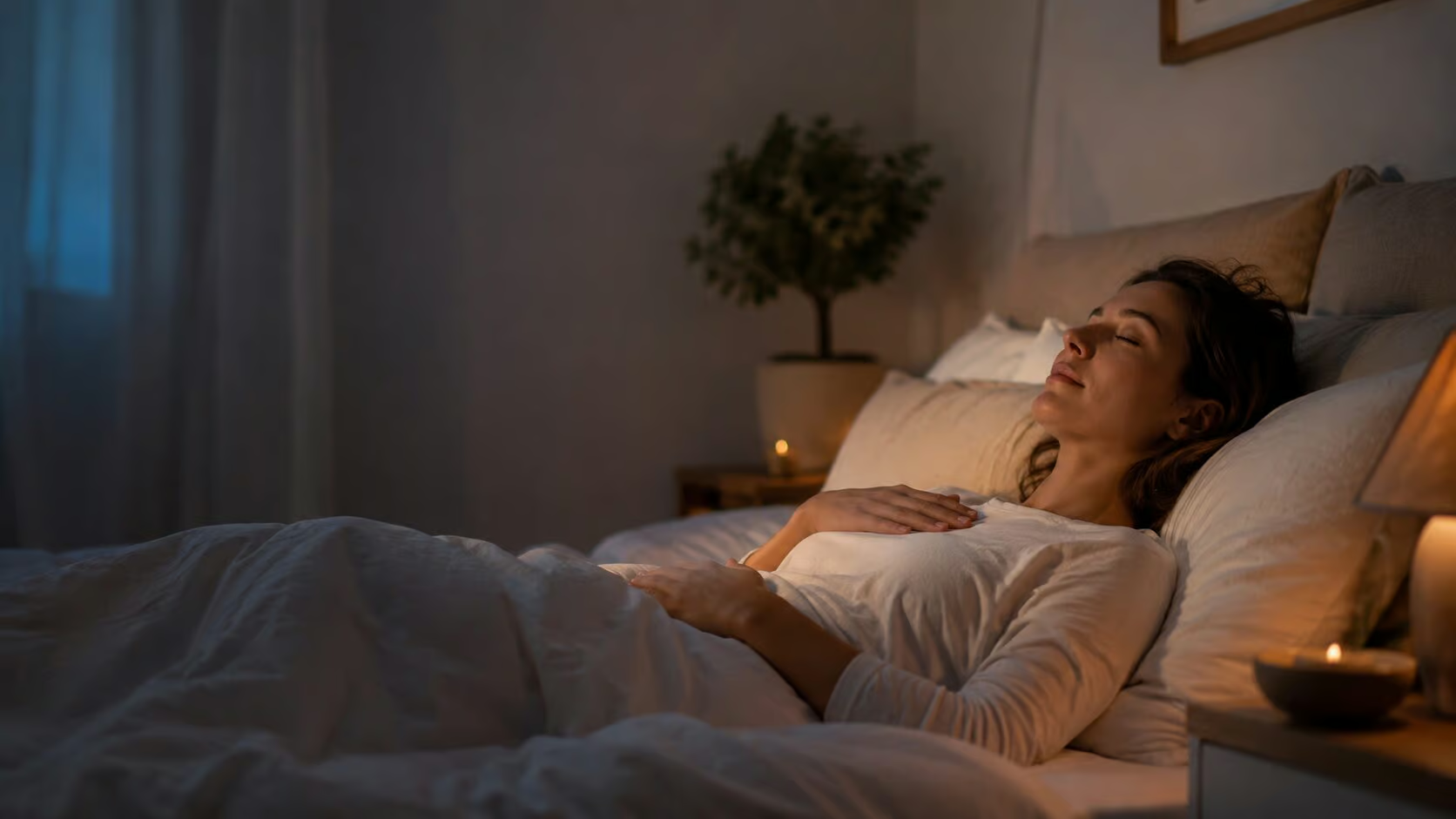
- Lie comfortably on your back or sit upright.
- Breathe in gently through the nose for 5 seconds.
- Exhale softly through the nose for 5 seconds.
- Continue for 5 to 10 minutes.
- Keep the breath smooth and effortless.
The key is softness.
You are not trying to “take big breaths.” You are teaching the body safety through rhythm.
Many people notice their body naturally becoming heavier, calmer, and sleepier within minutes.
The 4-7-8 Breath Technique
Another powerful tool for sleep is the famous 4-7-8 breathing technique.
This method was popularized as a natural nervous system calming practice and works incredibly well for people who struggle with anxiety or racing thoughts at night.
The pattern is:
- Inhale through the nose for 4 seconds
- Hold the breath for 7 seconds
- Exhale slowly through the mouth for 8 seconds
The extended exhale is what makes this technique so powerful.
Longer exhales stimulate the parasympathetic nervous system, the “rest and digest” side of the body.
The breath hold also helps increase carbon dioxide tolerance, which can help calm over-breathing patterns and create a deeper sense of relaxation.
How to Practice 4-7-8 Breathing
- Get comfortable in bed.
- Inhale quietly through the nose for 4 seconds.
- Hold gently for 7 seconds.
- Exhale slowly for 8 seconds.
- Repeat for 4 to 8 rounds.
Don’t force the breath hold.
This technique should feel calming, not stressful.
If the timing feels too long at first, shorten the counts slightly and gradually build up over time.
Breathwork Before Bed: A New Nighttime Ritual
Most people spend the last hour before bed overstimulating themselves.
- Bright
- Lights
- Phones
- Emails
- News
- Stress.
Then they expect the body to suddenly shut off.
Breathwork creates a transition ritual.
It tells the nervous system: “You are safe now. You can let go.”
Imagine replacing nighttime scrolling with:
- 10 minutes of coherence breathing
- Gentle nasal breathing
- Soft lighting
- Calm music
- Stillness
That combination can completely change sleep quality over time.
Sleep Is Recovery
Deep sleep is where healing happens.
Hormones regulate. The brain detoxifies. Muscles recover. The nervous system recalibrates.
And one of the simplest ways to support better sleep naturally is through conscious breathing.
Not with force.
Not with intensity.
But with awareness.
Slow breath.
Slow heart.
Quiet mind.
Sometimes the greatest sleep hack isn’t another supplement.
It’s learning how to breathe again.